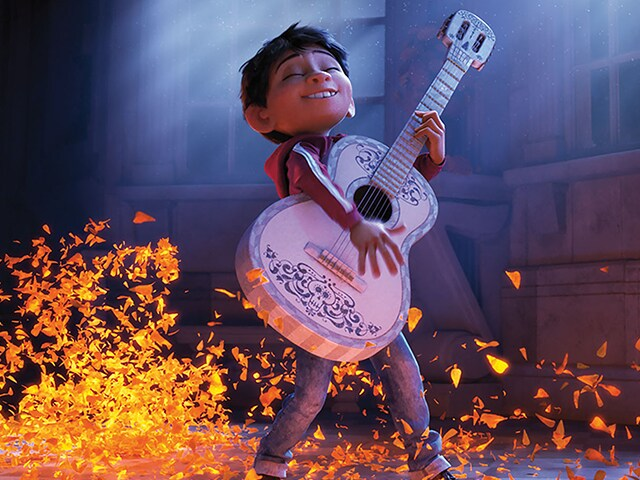
Picture from Disney Movies official website
Did you miss watching an amazing animated film from Pixar? If yes, then Coco is here to cure your longing. For those who like watching a heart-warming film with the touch of musicals, you must surely add this film to your watch-list. You will find many touching scenes in this film. At any rate, Coco is considered as a one-of-a-kind film that feels like a return form for Pixar’s production because of its well-wrapped family-themed film that covers Mexican traditional culture while blending it with great, memorable music and songs to develop the storylines.
Coco (2017) is a film produced by Pixar Animation Studios for Walt Disney Pictures. It is inspired by a Mexican holiday, Day of the Dead or Día de Muertos. The film stars Anthony Gonzalez, Gael García Bernal, Benjamin Bratt and friends as the voice actors. Coco is directed by Lee Unkrich, co-directed by Adrian Molina, and produced by Darla K. Anderson. The Original Soundtrack (OST) album features eight original songs written by Germaine Franco, Adrian Molina, Robert Lopez and Kristen Anderson-Lopez. This film is memorable for its original soundtrack that has led the film to gain many achievements. At the 90th Oscars, Coco collected two wins for the awards “Best Animated Feature” and “Best Song” for the song “Remember Me” (Germaine Franco Composer, 2018).
The story of Coco revolves around Miguel, a 12-year-old boy who dreams of being a musician, like the mega celebrity singer Ernesto de la Cruz (voiced by Benjamin Bratt) who became a screen star and recording legend before being crushed to death by a falling bell in 1942. But Miguel is all set to join the family’s trade: making shoes. While the plot and story of the film follow the young boy Miguel, by the end of the film, everything hinges on the character of Coco, Miguel’s grandmother.
Coco heavily focuses on life and death affirmation. One day, on the day of a singing competition, Miguel is transported into the Land of the Dead while trying to get the legend’s guitar hanging inside a museum. In the Land of the Dead, he finds out that in order for people to keep living in the Land of Dead, it is necessary for the alive ones to remember them through stories told. Then Miguel faces several obstacles in accomplishing his goal: to find the truth about his late musician great-great-grandfather’s death and keep him to be remembered by his family, especially by Coco.
The key strength of Coco lies in its family-centred themes and its exploration of life and death. The plot emphasises the importance of remembering the loved ones and celebrates the enduring power of family connections. Through its depiction of the afterlife as envisioned by the people of Santa Cecilia, the film conveys universal messages about love, loss, and legacy.
By bringing the theme of life and death, this film is heavily inspired and is based on the real ceremony in Mexican culture called “The Day of the Dead” or Día de los Muertos. It is a Mexican holiday celebrated on November 1st and 2nd to honor and remember the deceased loved ones, and to celebrate this event, families create ofrendas (altars) in their homes or at gravesites to welcome the spirits of the deceased (Sandoval, 2024). These altars are adorned with marigold flowers, candles, photographs, and personal mementos, along with offerings of the deceased’s favorite foods and drinks, such as pan de muerto (sweet bread) and sugar skulls. For example, the beginning of the film shows how the Rivera family prepares the rituals for celebrating Día de los Muertos. Marigolds, known as cempasúchil, are believed to guide the spirits back to the living world with their vibrant color and scent. That is why this flower is shown on screen when the unlived cross for it to be used as a bridge.
The culture of Día de los Muertos is also perfectly presented because it covers the real habits and tradition of the Mexicans. For example, on the celebration day, families clean and decorate graves, share stories, and partake in festive activities like parades, music, and dancing—these activities are presented in the beginning of the film, but with the exception and prohibition of playing music in the Rivera family. This part takes an important role in the development of the plot. For those who have already known about the Mexican tradition of remembering the death must notice this difference and wonder why the Rivera celebrate Día de los Muertos without any music.
One of the film’s standout elements that surely needs to be mentioned is its soundtrack because it is essential for the development of the story. For example, the main song that is played for more than three times in the film is “Remember Me”. First, this song represents the golden era of Ernesto de la Cruz who is a very famous musician in his era. This song becomes even more memorable for his fans, as it is the last song he sings before he dies. People keep singing this song and remember him as the legendary musician who has created masterpiece. That is the reason he is able to have a joyful life in the land of the dead, before the truth is discovered by everyone. Then, it is unveiled that he is the villain. He got his popularity by stealing the song from the original legendary musician, Hector Rivera. Moving on, the melody of the song “Remember Me’ sung by Mr. de la Cruz is rather upbeat and gives off a happy, tingling atmosphere despite the sentimental lyrics and cruel backgrounds.
On the other hand, when the song “Remember Me” is on the screen again, it has already the time for Coco’s father, Hector Rivera to sing the song. The scene where young Hector singing the song he wrote to her little daughter is shown in flashback. This part holds a significant role because it becomes the link on how music takes a very important spot in Coco’s memory. Hector sings it like he is singing a lullaby to his beloved child. The way Hector sings can both melt and calm the audience who is listening to it: as if the audience is Coco, and Coco is the audience. All of the people who watch the scene surely feel the same thing. The young Hector, little Coco, an ordinary old guitar, and a lullaby on one fine afternoon combined together to make such a touching, nostalgic, yet heart-wrenching scene. It is one of the most hurtful scenes from the film because after the flashback ends, the screen again shows Hector with his pitiful expression. He has gone through a lot in the land of the dead— no one in his family thinks of him, his wife hates him, and his best friend steals his song. But being able to think about the moment with his daughter again, makes him realise that no matter what, in the bottom of his heart, he always remembers and loves his daughter, his family. Therefore, the biggest reason that Hector is able to experience and spend happier times in the land of the dead is because of his meeting with the young boy, his great grandchild, Miguel.
The last character to sing the song “Remember Me” is the grandchild Miguel. The scene when Miguel shows up again after being in the land of the dead is such a teardrop moment. He is just a little kid who has just discovered the truth that can change his whole family’s mindset. As soon as he gets to the real world, he looks for ways to make Abuela Coco remember her Papa Hector because Miguel is scared that Hector might be gone forever since no one remembers him. Miguel takes the guitar quickly and starts singing the song “Remember Me” in front of Coco. Slowly, Coco seems to start remembering the lyrics and begins to sing with Miguel. Miguel’s childlike, innocent voice brings the atmosphere back to when Coco was still the same age as him. His voice blends with Coco’s old, trembled voice very smoothly. Coco murmers “Papa” and immediately takes out her Papa’s picture that is put neatly inside the drawers. The whole sequence of the scenes just shows how the song “Remember Me” is cleverly used to make Coco, who suffers from dementia and who is unable to remember thing such as Miguel’s name, to remember her father. It is the moment that might make the audience realise that the great great great grandparents were once a little kid, and that the little kid will once be old too. And most importantly, on the other side, Coco’s father, Hector, may have a happy life in the land of the dead because he is remembered by his daughter.
The lyrics, “Remember me, though I have to say goodbye” represent the film that is going to reach its end. The word “goodbye” in the lyrics also represents death, as the scene before the ending of the film shows Abuela Coco who is about to die soon. And when she does, she finally meets her parents again in the land of the dead. Her Papa still treats her like a little kid even though Coco’s figure is an old lady. The words “remember me” are repeated many times in the song, as they best represent the film’s storyline: the people who are still alive need to remember those who have passed away—so that their souls can be happy in the after-life. Lastly, the lyrics incorporate with the ending scene where Hector is nervously checking whether he can cross the bridge or not. And when his face is found in someone’s family picture, he gets the permission to cross the bridge. He is able to smile again. He knows that he is remembered, and that he can cross the bridge with his family from now until the future celebrations. This first line of the song really means a lot. It is like a reminder for the audience to keep remembering and praying for the loved ones even though they have already said goodbye.
However, Coco has several weaknesses despite of its well-driven storylines, though they were not as noticeable. This film lacks in showing the relationships between characters. The introductions between the good characters like Hector, and the villain like Ernesto are not given the same amount of effort. For example, the audience may see clearly how well Hector treats his daughter, Coco, from the time when he is still in a young age until he is dead. The character development of Hector is clearly shown in the film. But the audience can only know Hector and Ernesto’s relationship through the protagonist’s storytelling. The character building for Ernesto is not shown as much as it needs to, even though he is the only villain in the film. Also, there could have been a specific scene for showing their friendship as best friends before turning as enemies.
Coco used its traditional cultural themed in the most effective way. It brings up a certain ceremony from Mexican culture and serves it with the most suitable soundtrack. The blending of the musical elements and the storylines is very smooth. Songs are put perfectly to match every scene that is currently showing. Through the beginning until the end of the film, the plot twists, the storyline development, and the music included in the film are very much enjoyable and memorable.
Overall, Coco is a breath of fresh air coming from the collaboration of Disney and Pixar. Coco’s smooth blending of unforgettable songs and storylines pull your heartstrings, making Coco a film that truly has a special spot in everyone’s heart. Whether you are a die-hard Pixar fan, someone who loves musicals, or just looking for a feel-good movie to watch with your family, Coco is a perfect pick. It is the kind of movie that stays with you long after the credits roll, reminding you of the power of love, family, memory, and ambition. For people with family who love music, Coco surely adds deeper valuable message to the audiences’ hearts— as they will relate to how music can keep the memories of the unlived alive.
References
Germaine Franco Composer. (2018). Pixar and Disney’s Coco wins two oscars for best animated feature and best song. https://www.germainefranco.com/pixar-disneys-coco-wins-two-oscars-best-animated-feature-best-song/#:~:text=View%20Larger%20Image-,Pixar%20and%20Disney's%20Coco%20wins%20two%20Oscars%20for%20Best%20Animated,7th%2C%202018%7CNews%2C%20Awards
Sandoval, G. (2024). What is día de los muertos? Things to know for day of the dead celebrations. Salem Statesman Journal. https://www.statesmanjournal.com/story/life/2024/11/01/dia-de-los-muertos-day-of-the-dead-celebrations/75936122007/

 Disney Animated Musical Film Reviews
Leave a comment